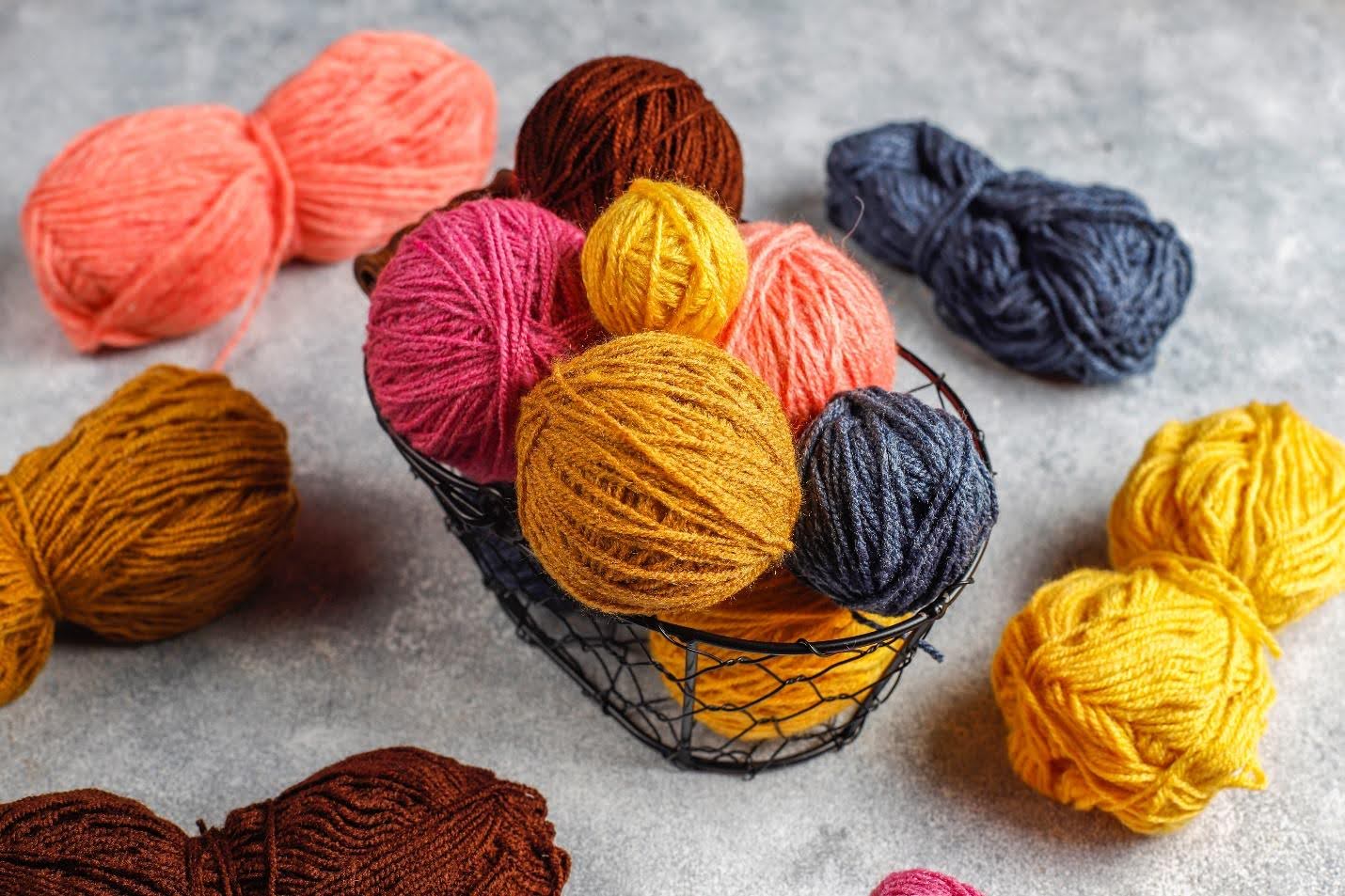

From chunky sweaters that provide warmth in winter to delicate lace shawls perfect for a spring evening, every cozy creation begins with a single element: yarn. It’s the foundation of textiles, a source for artistic expression.
It is a fiber that connects us to ancient traditions of weaving and knitting. There are diverse materials, complex weight classifications, and uses of yarn that might confuse you. This comprehensive guide aims to solve the confusion by explaining different types and weights of yarn.
Understanding the Basics of Yarn
Yarn is a continuous strand of fibers or filaments, either natural or synthetic, which are twisted together. Yarn is a fundamental material used in textile crafts and industry, used for knitting, crocheting, weaving, and sewing.
Types of Yarn by Fiber
The yarn fiber is further divided into three categories:
Natural Animal Fibers
Wool: It is a warm and luxurious fiber. It can be a bit scratchy and depends on the type of breed it came from. It is ideal for cold weather.
Silk: It is an elegant and shiny yarn fiber. It is perfect for lightweight clothes and accessories, such as shawls.
Alpaca: A soft, durable, and warm fiber from alpacas. It is less scratchy than wool and can be worn as clothes that are in contact with the skin.
Mohair: It has a soft and fluffy texture and gives the ‘halo” effect. It is ideal for sweaters and scarves.
Natural Plant Fibers
Cotton: It is very common, absorbent, and suitable for kitchen and summer items, but lacks elasticity.
Linen: It has a crisp texture but is lightweight and gets softer with washing.
Hemp: It is best for eco-conscious consumers. It is a strong fiber and has a rough look. It is perfect for bags and hats.
Bamboo: It is a soft and luxurious fiber and is perfect for tops and shawls.
Synthetic Yarn
Synthetic yarn is a man-made fiber, like polyester and acrylic. It is known for being durable and easy to care for, and is often used as a more affordable alternative to natural fibers.
Types of Yarn by Weight
The weight of yarn can affect the drape and stitch definition of the project. The weight of yarn is the thickness of the yarn strand, not its physical weight. The following yarn weight categories:
1. Lace
It is the thinnest and delicate type of yarn. It is perfect for complex projects, such as shawls and doilies.
2. Superfine
It is thicker than lace. It is perfect for socks and lightweight garments, baby items, or accessories.
3. Fine or Sport
A bit heavier than fingering, great for color work. It is ideal for baby clothes and lighter garments.
4. DK – Double Knitting
It is a light and smooth yarn. DK yarn is usually made from wool, cotton, silk, or synthetic fibers. It is best for garments and baby blankets.
5. Worsted
A medium-weight but sturdy yarn that is perfect for sweaters and scarves.
6. Bulky
It is thick and warm, and is used for quick projects and chunky blankets.
7. Super Bulky
It is the thickest of all yarns and best for rugs and blankets.
8. Jumbo
It is extremely thick, for arm knitting or massive, chunky items.